The Art of the Intimate Home: Designing for Mood, Comfort, and Modern Living
In the modern era of interior architecture, we are seeing a profound shift away from sheer square footage toward the quality of the living experience. Whether you are inhabiting a sprawling estate or a 33-square-meter Parisian atelier, the principles of comfort and mood remain the same: they are dictated by how light, material, and layout interact to serve the human spirit.
Drawing from contemporary trends in flexible urban living, here is an expert guide on how to transform any space into a sanctuary that balances functionality with high-end design.
1. The Power of “Compression and Release”
One of the most effective ways to influence mood and the perception of space is through the strategic use of color and ceiling height. A current trend involves using a bold, saturated palette in transition areas, such as an entrance drenched in red-orange paint. By dropping the ceiling height slightly in these zones, you create a sense of “compression”. As you step from a dark, low-ceilinged hallway into a bright living area, the rest of the home feels instantaneously larger and more airy.
2. Multi-Functional Materiality and Industrial Heritage
Current design often looks to the past to inform the future. To create a space with character, consider materials that reflect the “spirit” of the building’s history, such as varnished concrete floors or salvaged oak.
• Expert Tip: For high-traffic areas like home offices, choose a durable varnish that is scratch-resistant. This allows you to eliminate the need for rugs under rolling chairs, keeping the floor plan looking clean and uninterrupted.
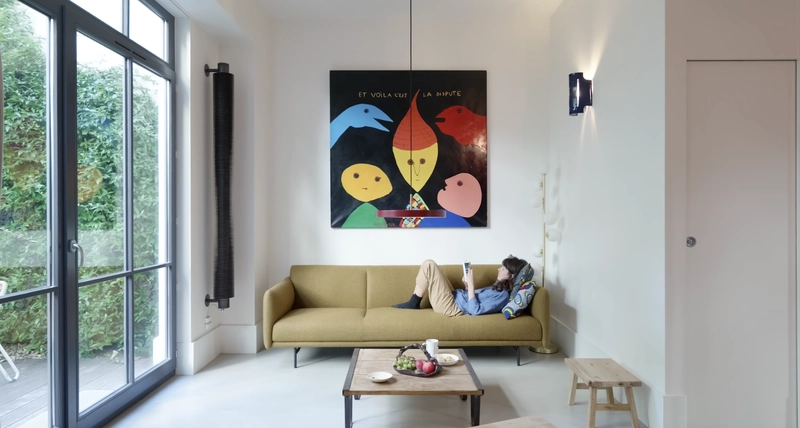
• Aesthetic Synergy: Incorporate industrial elements like finned radiators or brushed stainless steel to provide a soft reflection that bounces light throughout the room without being distractingly shiny.
3. The “Invisible” Kitchen and Utility
To enhance the comfort of a living area, the modern trend is to make utility spaces look less “obvious.” In a compact home, a kitchen can be reduced to its essentials and designed to blend into the architecture.
• Concealment: Use cabinetry to hide the dishwasher, fridge, and trash bins.
• Comfort in Layout: Moving appliances like the oven to the opposite side of a main kitchen line can make the workspace more comfortable than a traditional linear kitchen and keeps the appliance practically invisible from the lounge area.
• Material Choice: Use sophisticated surfaces like lava stone with an enamel finish for countertops, paired with modular shelving to keep the space feeling light and flexible.
4. Light as a Tool for Expansion
Light is the most critical factor in determining mood. Beyond natural sunlight, the use of reflective surfaces is key to a luminous home.
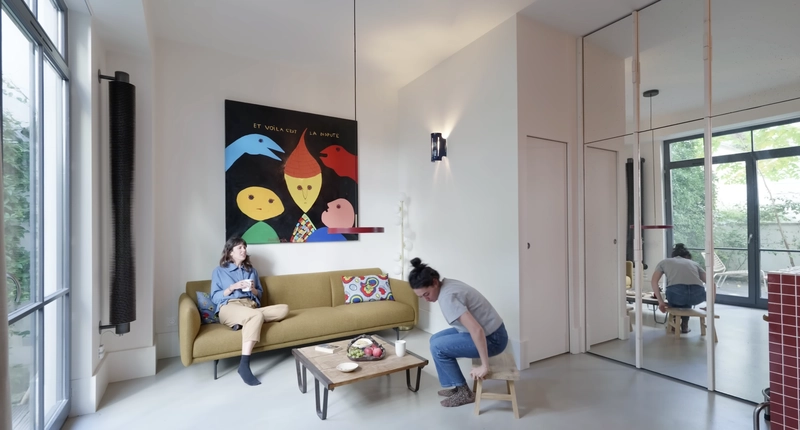
• Mirror Magic: Floor-to-ceiling mirrored closet doors can reflect an outdoor garden, effectively “doubling” the visual space and bringing the outside in.
• Reflective Accents: Combining mirrors with glossy tiles and metallic fixtures creates a “reflective wall” that makes even the darkest corners of an apartment feel bright.
• Thoughtful Lighting: Incorporate “small things that make a big difference,” such as portable, dimmable lamps made from sustainable materials like ocean-bound plastic. These offer flexibility and a playful touch to a sophisticated room.
5. Flexibility Through Smart Zoning
For those who work from home, physical separation is vital for mental well-being. A mezzanine level can elevate an office or bedroom, creating a “room within a room” feeling.
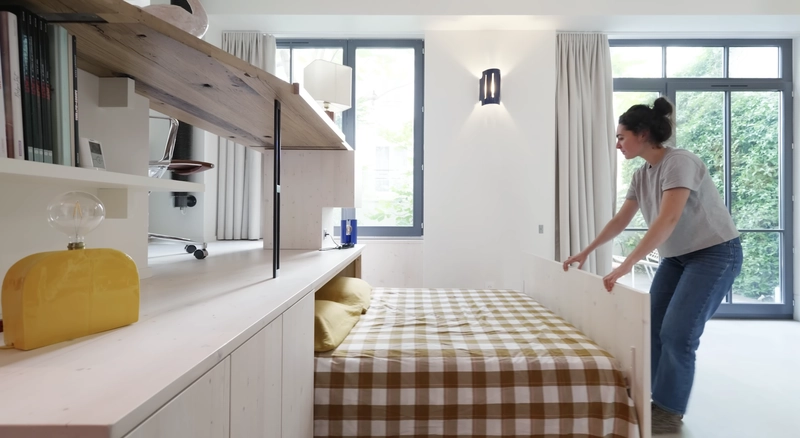
• Sliding Solutions: In small footprints, a bed on a roller-and-track mechanism can slide under a raised office platform when not in use. This allows the room to remain a professional workspace during the day and a restful bedroom at night, without the “cluttered” look of a typical studio.
6. Connecting with the Outdoors
Finally, a home should never feel like a closed box. Use large terrace doors to visually extend the apartment into a garden or deck. Framing these views with cream blackout curtains allows you to transition from a bright, nature-connected day to a fully darkened, cozy sanctuary at night.
By focusing on thoughtful design and durable materials, even a tiny footprint can offer moments of quiet and the high quality of a much larger home.