Reconfigurable Off-Grid Cabin Designed for Flexible Living, Netherlands 30sqm/323sqft
When I lost my father, I was only twenty-one, and he was only fifty-five. In the quiet, heavy aftermath of that loss, he began to return to me in vivid dreams, urging me to leave the static world behind and go into nature. Those dreams became the blueprint for my creative process; I did the most literal thing I could and designed a house that could open itself entirely to the wild. This was not just a construction project; it was a way for me to heal and surround myself with life. I named the first cabin after my mother, Anna, creating a space that is, at its heart, simply “a place to be”.
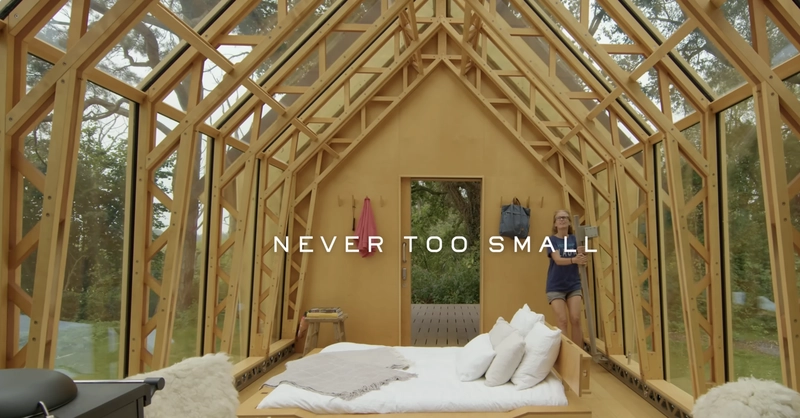
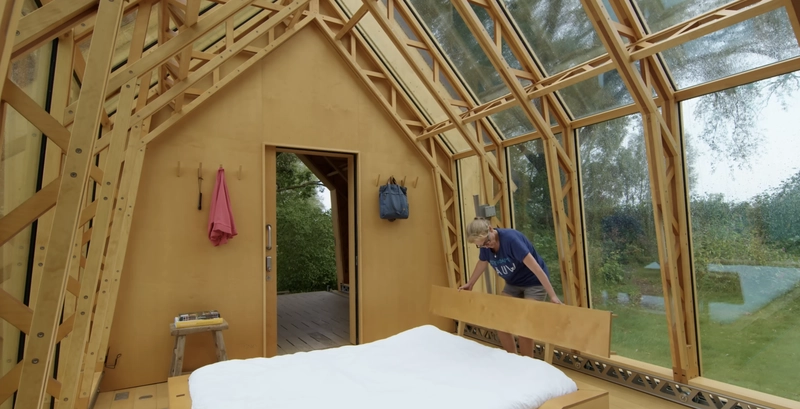
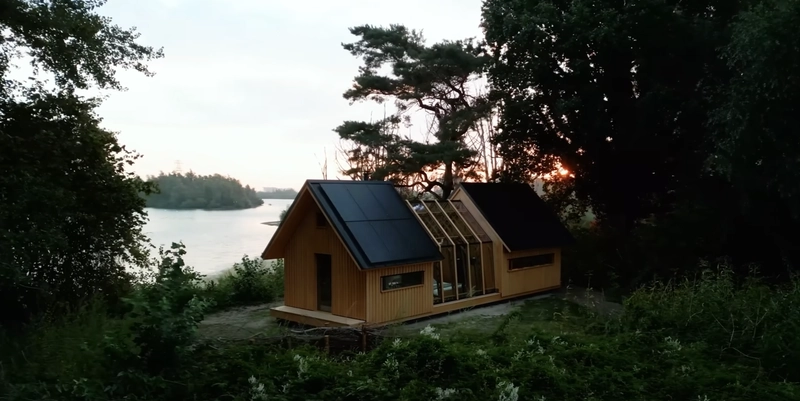
My creative vision for Cabin ANNA was to move away from the idea of a house as a static box with closed boundaries. I wanted a transformative space where I could use my own muscle power to adjust the boundaries of my home to the world around me. The cabin consists of a fixed core—containing the kitchen and bathroom—and sliding glass and wooden shells that allow the living space to expand from 30m² to 50m². When I push the glass out, I create a “bonus” layout for hosting dinners or yoga, allowing the home to breathe with my needs. This flexibility is supported by reinforced trusses, similar to those found in railway stations, which provide the rigidity needed to keep the cabin stable even when the wind blows through its open sides.
Every aesthetic choice I made was intended to foster a “Zen experience” and a deep connection to the essence of life. I designed the bed and the bath to be hidden beneath the floorboards, revealed only when needed through a winch system or removable panels. This allows the cabin to remain an open-plan sanctuary, undisturbed by the visual clutter of furniture. I chose materials that balance durability with a cozy, natural feel:
• Birch ply and stainless steel in the galley kitchen for a clean, functional beauty.
• Coya wood in the bathroom for its warmth and resilience in humid environments.
• Elongated windows that frame the outdoors while protecting the interior from the harsh summer sun.
Living in the Biesbosch wildlife reserve, a unique freshwater delta, requires a home that respects its environment. My creative process was guided by the philosophy of leaving nothing behind; the cabin sits on a screw foundation and is entirely demountable, meaning it can be packed into a truck and moved without a trace. It is a fully off-grid existence, where water is pumped from deep below and the wood stove heats the boiler during the dark Dutch winters. To me, this cabin proves that you do not need a massive house to find architectural quality; instead, you can find a high-quality life in a small, intentional space that connects you to yourself and the world.
Designing this home was like learning to breathe with the landscape—a structure that does not merely occupy space, but expands and contracts in a rhythmic conversation with the changing seasons.