The Home Unbound: How Reconfigurable Living is Redefining the Modern Sanctuary
For decades, the concept of a home was synonymous with permanence—four static walls and a roof designed to keep the world out. However, a new movement in architecture is suggesting that the modern lifestyle requires something far more fluid. As we look to reconnect with nature and reduce our environmental footprint, the “static house” is being replaced by transformative living spaces that adapt to their surroundings and the needs of their inhabitants.
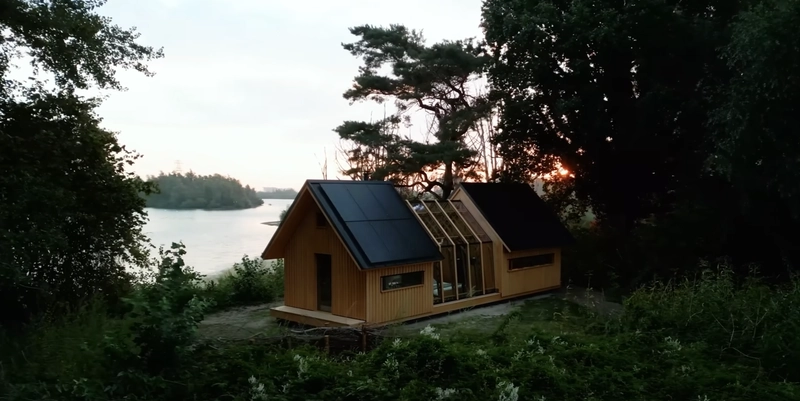
One of the most striking examples of this shift is found in the heart of the Netherlands’ Biesbosch wildlife reserve: Cabin ANNA. This 30-square-meter structure challenges the traditional notion of a dwelling, functioning not as a rigid box but as a “place to be” that evolves throughout the day.
The Healing Power of Flexibility
The inspiration for this new way of living often stems from a personal desire for connection. For the designer of Cabin ANNA, the project began as a way to heal after the early passing of his father, a man deeply connected to the outdoors. This emotional origin led to a design where boundaries are constantly adjusted by the inhabitant using their own muscle power, allowing them to open the house directly to the environment.
“Instead of having a static house with closed boundaries, you actually have a transformative cabin,” the designer explains, noting that the structure was built to help people feel at one with nature. This reflects a broader lifestyle trend where homeowners prioritize mental well-being and environmental immersion over sheer square footage.
Engineering the “Bonus Layout”
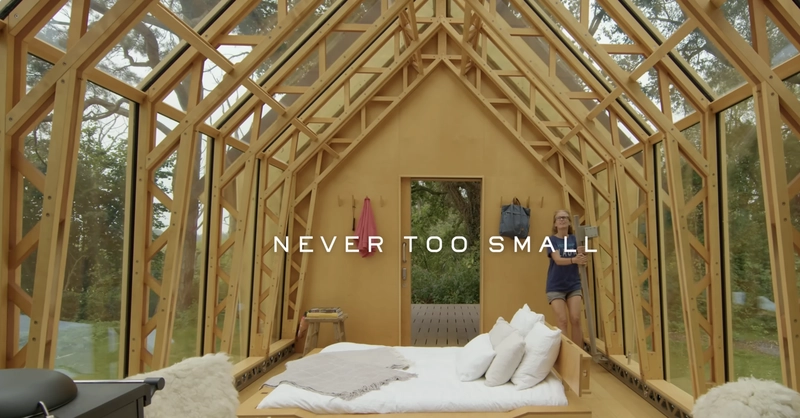
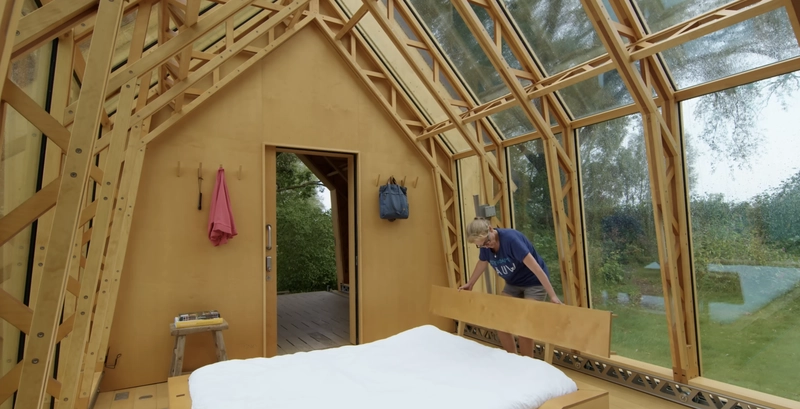
Modern living often demands that a single space serve multiple purposes—a home office by day, a social hub by night, and a sanctuary by evening. Cabin ANNA achieves this through a series of sliding shells made of glass and wood. Using an “Inverted Dutch Bike Brake System,” a resident can easily move shells weighing 3,000 kilos to expand the cabin from its compact 30m² form to a 50m² “bonus layout”.
This flexibility is supported by ingenious internal engineering:
• Hidden Amenities: A bed is stored under the floor and raised with a winch system, while a bath is revealed by lifting floor panels.
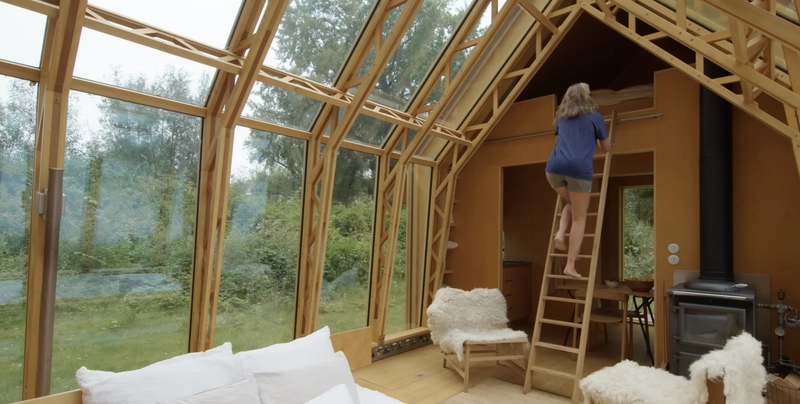
• Structural Rigidity: Because the sliding shells lack the four fixed walls of a traditional house, they utilize reinforced trusses similar to those found in railway stations to withstand wind.
• Multi-functional Design: Once the bed is stored, the open-plan cabin can host everything from yoga retreats to dinner parties.
Quality Over Quantity
The move toward smaller, high-quality spaces is a direct response to the resource-heavy 100 or 200-square-meter homes of the past. Designers are proving that architectural quality does not require massive scale. In the cabin, every inch is maximized, from a stainless steel and birch ply “galley kitchen” to a mezzanine that provides extra sleeping space for guests.
Sustainability is also baked into the lifestyle. Modern dwellers are increasingly looking for off-grid independence. Cabin ANNA, for instance, pumps water from 30 meters below ground and utilizes a three-phase sewage system so clean that wastewater can return directly to the wildlife reserve. In the winter, a wood stove doubles as a boiler to provide hot water when solar energy is scarce.
A Portable Future
Perhaps the most radical shift in modern living is the decoupling of the home from the land. Unlike traditional houses, these modern structures can be demountable. Sitting on a screw foundation, the entire cabin can be taken apart, packed into a truck, and moved to a new location without leaving anything behind.
As our lifestyles become more mobile and our connection to the natural world more vital, the home is becoming less of a static asset and more of a dynamic tool for living. As the designer of ANNA suggests, you don’t need a massive footprint to find the “essence of life”—sometimes, you just need a space that knows how to open up.