The Art of the “Small Intervention”: Crafting Comfort and Character in Modern Interiors
In the world of contemporary interior design, we are seeing a profound shift away from excessive square footage toward the thoughtful curation of space. As an expert in the field, I often find that the most impactful designs aren’t born from unlimited budgets, but from the “small interventions” that prioritize light, heritage, and functional flow. Whether you are working with a sprawling estate or a 60-square-meter urban flat, the choices you make regarding layout and materiality directly dictate the mood of your home.
1. Prioritize Fluidity and Light
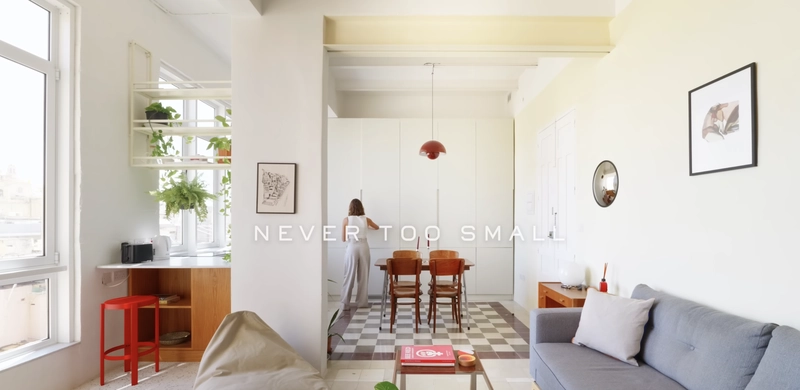
One of the most effective ways to elevate the mood of a home is to maximize the reach of natural light. Current trends favor breaking down internal barriers to create a single, cohesive volume. By widening doorways—or removing them entirely—to connect the kitchen, living, and dining areas, you allow light to penetrate deep into the floorplan.
To further enhance the sense of spaciousness, consider whitewashing stone or plaster walls. This simple act expresses the natural, three-dimensional texture of the building’s shell while creating a bright, reflective canvas that makes even the smallest room feel airy. If your home boasts high ceilings, use verticality to your advantage; installing high shelving can draw the eye upward, accentuating the height of the space rather than its narrow footprint.
2. The Psychological Power of the View
Design is not just about what is inside; it is about how we relate to the world outside. A key trend in modern architecture is the lowering of windowsills. By bringing the windowsill down to the level of a kitchen countertop or a sitting area, you create a seamless visual transition that draws the eye toward the city or landscape.
This technique mimics the feeling of an outdoor terrace, effectively expanding your living room beyond its physical walls. When we connect our interiors to the external environment, the mood of the home shifts from “enclosed” to “expansive,” significantly reducing the stress often associated with urban living.
3. Bespoke Solutions: The End of Visual Clutter
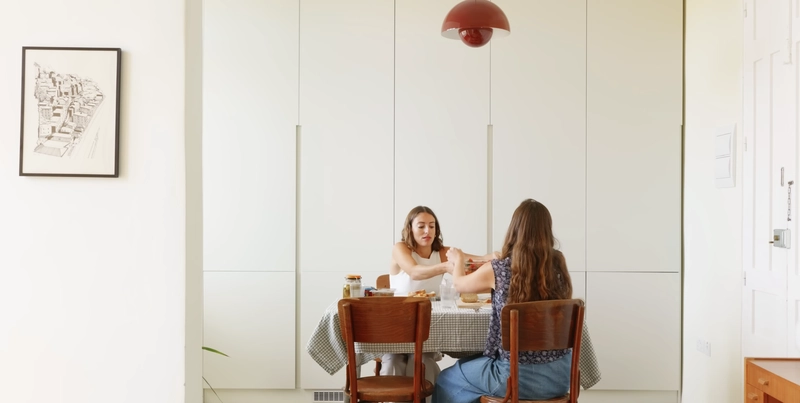
Comfort is often a byproduct of order. To maintain a serene atmosphere, current design favors bespoke, full-height cabinetry that conceals the “noise” of daily life. Integrating appliances like the fridge, washer-dryer, and even cleaning supplies behind minimal, tall doors ensures that the aesthetic remains uninterrupted.
When designing these units, small details matter:
• Integrated Overhangs: Extend kitchen countertops to create a breakfast bar, providing additional workspace without the need for extra furniture.
• Concealed Hinges and Finger Pulls: Using a single continuous groove instead of bulky hardware allows large storage units to feel like fitted furniture rather than heavy walls.
• Shadow Gaps: When introducing new materials like a soffit to hide electrical conduits, use a “shadow gap” to demarcate the new from the old, adding a sophisticated, architectural touch.
4. Honoring Heritage and “Traces” of the Past
A home without history can feel clinical. We are seeing a resurgence in the use of reclaimed materials to add “character” and soul. For instance, using reclaimed cement tiles where walls were once removed leaves a beautiful “trace” of the original layout, honoring the building’s history while modernizing the space.
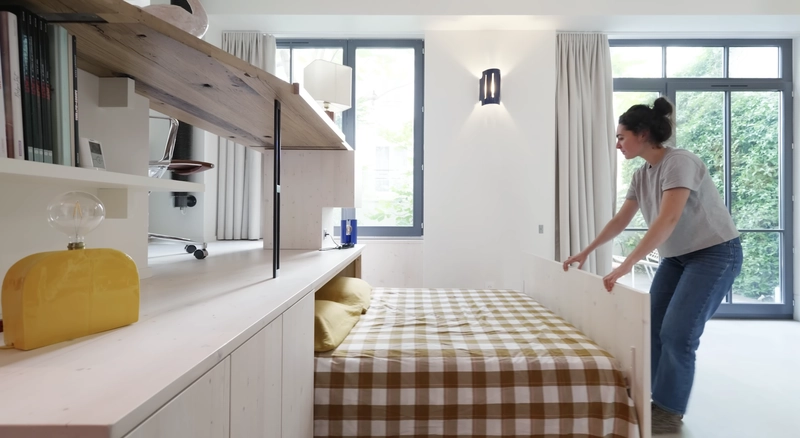
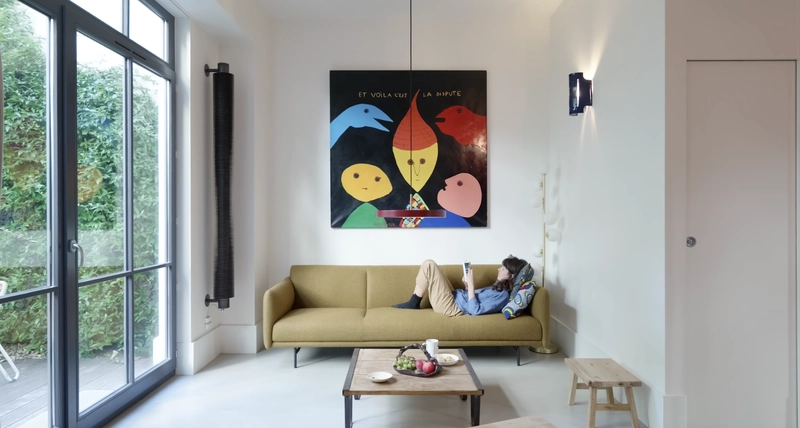
Mixing eras is also a powerful way to affect mood. Pairing a mid-century coffee table with a sleek, contemporary sofa bed creates a curated, “lived-in” feel that suggests a luxurious old palace rather than a sterile showroom. Don’t be afraid to keep original furniture or period railings; these elements provide a sense of continuity and place.
5. Intentional Color and Texture
Finally, use color to provide focus and “unify” rooms. While neutral tones are excellent for main living areas, a bold pop of color—such as a blue ceiling in a bathroom—can provide a stunning contrast to white tiling and create a sense of intentionality and drama.